Fish Tagine
Soups & Stews • Morocco
About Fish Tagine
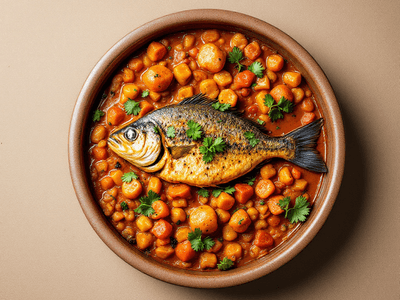
Whitefish slow-cooked in chermoula with potatoes, peppers, and preserved lemon.
How to Make Fish Tagine (Traditional & Healthy Version)
Fish Tagine is a beloved North African stew, celebrated for its fragrant blend of spices, fresh vegetables, and tender white fish. Originating in the coastal regions of North Africa, particularly Morocco, this dish reflects the region’s rich culinary heritage and emphasis on communal dining. Traditionally cooked in a conical clay pot called a 'tagine,' the slow simmering method ensures deep infusion of flavor and keeps the fish moist and succulent. This healthy Fish Tagine recipe is packed with Mediterranean influences common to North African cuisine, using wholesome ingredients such as tomatoes, bell peppers, potatoes, and olives. The combination of aromatic spices like cumin, paprika, and turmeric not only enhances the flavor but also provides a nutritional boost. Fish Tagine is a symbol of hospitality and is often enjoyed during family gatherings or festive occasions, making it a fantastic introduction to the vibrant flavors of Africa for an international audience.
Ingredients(for 1 generous bowl (approx. 350g) per person)
- 300g White fish fillets (such as tilapia or hake)
- 1 tablespoon Olive oil (extra virgin)
- 1 medium Onion (finely sliced)
- 2 Garlic cloves (minced)
- 2 medium Tomatoes (chopped)
- 1 Bell pepper (red or yellow, sliced)
- 1 medium Potato (peeled and sliced)
- 8 Green olives (pitted and halved)
- 2 tablespoons Fresh cilantro (chopped)
- 1 tablespoon Lemon juice (freshly squeezed)
- 1 teaspoon Ground cumin
- 1 teaspoon Paprika
- 1/2 teaspoon Turmeric
- 1/2 teaspoon Black pepper
- to taste Salt
Instructions
- 1
Prepare the marinade by mixing lemon juice, cumin, paprika, turmeric, black pepper, and salt in a small bowl. Coat the fish fillets with this mixture and let them marinate for at least 10 minutes.
10 minutes
Marinating enhances both flavor and tenderness.
- 2
Heat olive oil in a large tagine pot or heavy-bottomed pan over medium heat. Add sliced onions and garlic, sautéing until fragrant and translucent.
3 minutes
Avoid browning the onions to keep the stew light.
- 3
Layer the sliced potatoes at the bottom of the pot. Arrange chopped tomatoes and bell peppers over the potatoes.
2 minutes
Thin potato slices cook evenly and absorb flavors well.
- 4
Place the marinated fish fillets on top of the vegetables. Scatter olives and half the fresh cilantro over the fish.
2 minutes
Keep the fish pieces whole for best presentation.
Why This Dish is Healthy
This healthy Fish Tagine is a smart choice for calorie-conscious eaters because it is nutrient-dense, low in unhealthy fats, and packed with vitamins. The use of lean fish and minimal oil keeps the calorie count low, while the abundance of vegetables increases fiber and micronutrient intake. Spices add flavor without extra calories or sodium, supporting weight management and heart health.
Fish Tagine is rich in lean protein from white fish, delivering essential amino acids for muscle repair. The addition of colorful vegetables like tomatoes, peppers, and potatoes provides dietary fiber, vitamin C, potassium, and antioxidants. Olive oil contributes heart-healthy monounsaturated fats, while the spices offer anti-inflammatory benefits. This stew is naturally gluten-free, low in saturated fat, and balanced in macros, making it suitable for a variety of health-conscious diets.
Pro Tips
- 💡Tip 1: For extra depth, add a pinch of saffron during simmering.
- 💡Tip 2: Use fresh, locally caught fish for the best flavor and texture.
- 💡Tip 3: Let the tagine rest for 5 minutes before serving to allow flavors to meld.
Storage & Serving
Store leftovers in an airtight container in the refrigerator for up to 2 days. Reheat gently over low heat to preserve the fish's texture. Avoid freezing, as fish can become mushy.
Best served: Breakfast or Lunch
Nutrition Facts
| Nutrient | Per 100g |
|---|---|
| Energy | 165.0 kcal |
| Protein | 19.0 g |
| Carbohydrates | 8.0 g |
| Total Fat | 6.4 g |
| Fiber | 1.6 g |